UArizona Researchers Redefine How We See Skin Cancer
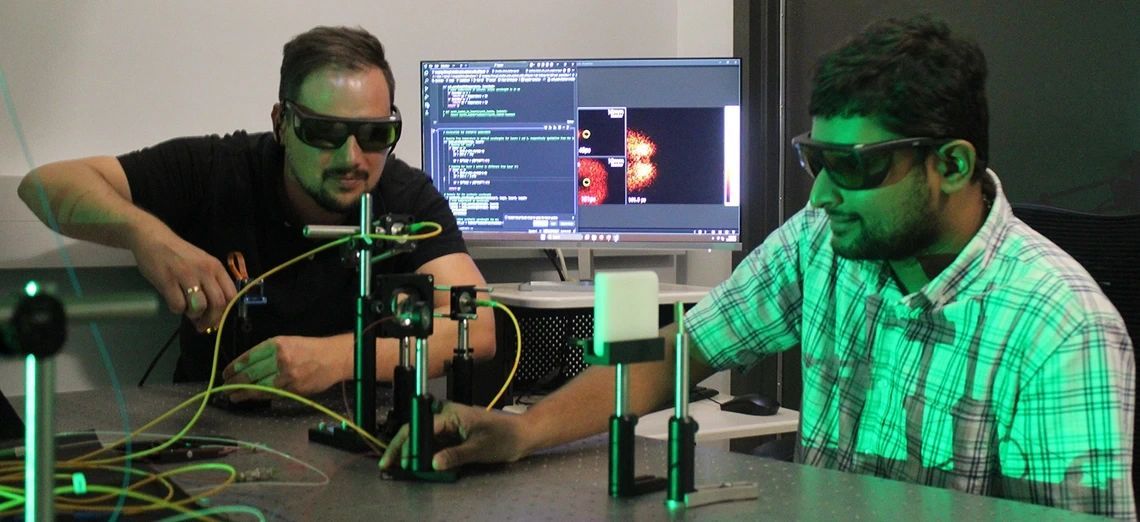
In a Tucson optics lab, beams of light dance across mirrors as researchers fine-tune a new way to see beneath the skin — no incision needed. Led by Dr. Florian Willomitzer from the James C. Wyant College of Optical Sciences and Dr. Clara Curiel-Lewandrowski from the UArizona Cancer Center,a University of Arizona team has secured $2.7 million from the NIH to develop Synthetic Wavelength Imaging (SWI)—a technology that could transform how doctors diagnose and treat skin cancers. SWI merges two light wavelengths into one “synthetic” signal that penetrates deeper tissue while keeping microscopic clarity. The approach allows physicians to define tumor margins, detect invasive lesions earlier, and monitor treatment progress in real time — all without surgery. Unlike existing optical tools that trade resolution for depth, SWI promises both. Researchers say the technique could eventually extend beyond dermatology, advancing non-invasive imaging in breast-cancer detection, brain research, and more. “We’re breaking free from the limits of traditional imaging,” Willomitzer says.“Light still has more to show us.” Follow Silicon Oasis for upcoming events, founder spotlights, and Arizona innovation news. 👉 Subscribe to the Silicon Oasis Magazin e to stay plugged in.
Subscribe to the Silicon Oasis hard print magazine and our daily news brief for ongoing coverage of Arizona’s innovation and tech landscape — in print and in your inbox.
Similar Blogs
News, Voices & Impact
Explore updates, field notes, and stories that showcase our mission and impact.